
Oaxacan Artist's Inspired by Local Myths & Nature

Rabbit- Best known as the symbol of the moon. The rabbits profile fits the shape of the dark region of a full moon. Instead of a man in the moon the Zapotecs and Mayans saw a rabbit in the moon. The Mayan moon goddess was frequently depicted in art holding a rabbit. It is said the mother moon had a reserve of 400 warrior rabbits that fought under the blue night.

Turtles- Land and especially aquatic tortugas are associated with music as their shells were used as instruments. If the gods were playing the turtle shells it was thought to be thunder. The Mixtec and Zapotec god of thunder Yahui wears a turtle shell. The Mayans associated the turtle shell with the shape of the earth and their sculptures depict the maize god rising from it. The Mayan ritual calendar was depicted as a turtle shell as well. Roaming the cosmos with the swirling world on it's back it makes a one hundred and thirty three year epoch procession.

Toads- Some species having 20 digits just like humans these amphibians are seen in early Olmec art as giving birth to kings. On a spring night the tree frog toad cousins sing that they have found the moisture needed to begin another year.

Crocodile- The crocodile's hard ridged surface and aquatic domain associated them with the concept of the earth floating over the sea. Always depicted as older than most other deities the crocodile is considered one of the original creator gods called Itzamma.

Deer- In Central Mexican folklore and art the deer were as small as dogs and identified with the gods of the hunt. One deer played an important role in a mythical episode where the young moon goddess fled her attackers on the back of a white stag. The Zapotec symbol for the seventh day is the deer. The beginning of the day and the evening is the essence of their being, a true analogue to circadian rhythm.

Jaguar- By far the most revered beast in all ancient Mesoamerican cultures. Unfortunately, because of the fear and respect they commanded chiefs and kings wore their pelts, made shoes into them, and made necklaces of their teeth. The jaguar god Tepeyollotl was thought to live in the heart of the mountains. Different minor jaguar deities are depicted on reliefs as paddlers, water lilies, and chubby jaguar babies. It was the jaguar king that came to Monte Alban to fight the last bearded giants that held that stronghold.
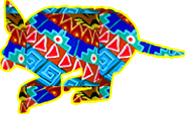
Nahual- Known as Nagual, Nahuatl or nahualli the form changing sorcerer or witch is known throughout both Meso and South America. These Antediluvian beings embody the shamanic powers of transformation and higher enlightenment. Franciscan monks and priests in the 16th century wrote of natives that could change their form to deer, birds, dogs, and rabbits. Depicted in stories as either petty thieves or protectors of villages the legend of the nahual is as vast as it is varied. Once thought of as guardian angels in pre-Columbian times then later relegated to witches or fruit stealers once Christianity was firmly in place. The nahual captures the spiritual essence of humans relationship with terrestrial earth. Past and future this creature witches for accoutrements.

Butterfly- Oddly associated with fire and war the butterfly is thought to be the soul of dead warriors in Zapotec and Mixtec cultures. The way of the wind takes the soul to the next adventure under the Sun.

Skeletons- In the both the ancient and present Mesoamerican world life and death exist in a dynamic complimentary way. Deceased ancestors exert a powerful influence upon the living. The dead sometimes acted as intermediaries between the living and the gods. Aztecs would perform separate festivals for adults and children. Many of these rituals have been incorporated into All Saints Day and All Souls day now referred to as Day of the Dead.

Spiders- were commonly identified with the female goddess and the Earth. This fanged nose bar goddess is associated with curing and midwifery. The tactician the one that makes the adversary take a turn in every way mystic.

Bats- Commonly viewed as symbolizing death by Mesoamerican culture this nocturnal flyer is often rendered with budging eyes and crossed bones. Zapotecs used engraved bat images onto funerary urns and emphasized large claws and round ears. Fortunately today science has discovered that it is bats and not bees who are the number one pollinators in the world.

Monkeys- In Central Mexico, the monkey god was known as Ozomatli and those born on their designated 11th day were lucky and happy people.

Dogs- Although dogs were mainly a food source to the Aztecs the Zapotecs had supernatural reverence to them as guides in the underworld. Human skeletons have been found buried along with their dogs. Folk legends tells of a great body of water in the underworld that only dogs can navigate. Black dogs were favored as they didn't mind getting wet or dirty and white dogs were a bit less desired as it was thought they liked being pristine clean. While terrestrial the family friend is both an avatar and angel.

Dragon- The Olmecs, forerunners to all Mesoamerican civilizations had several symbolic variations of their sky god. a paw with a wing or flame eyebrows were the more common motifs seen on pottery. Variations such as flying serpents were symbolized as lightning in Mixtec folklore. Biblical in nature and along the giants of it's time they are in the sky and in the lairs.

Owls- These nocturnal birds found at the entrance of caves were often associated with the underworld as caves were thought to lead to. Perceived as omens or messengers between humans and the divine the owl is considered the pre-columbian equivalent of an angel. Know them by their sound as they are the only ones in nature that can talk back to you.